Archives

25 Questions about Sex (and 25 Great Answers!)

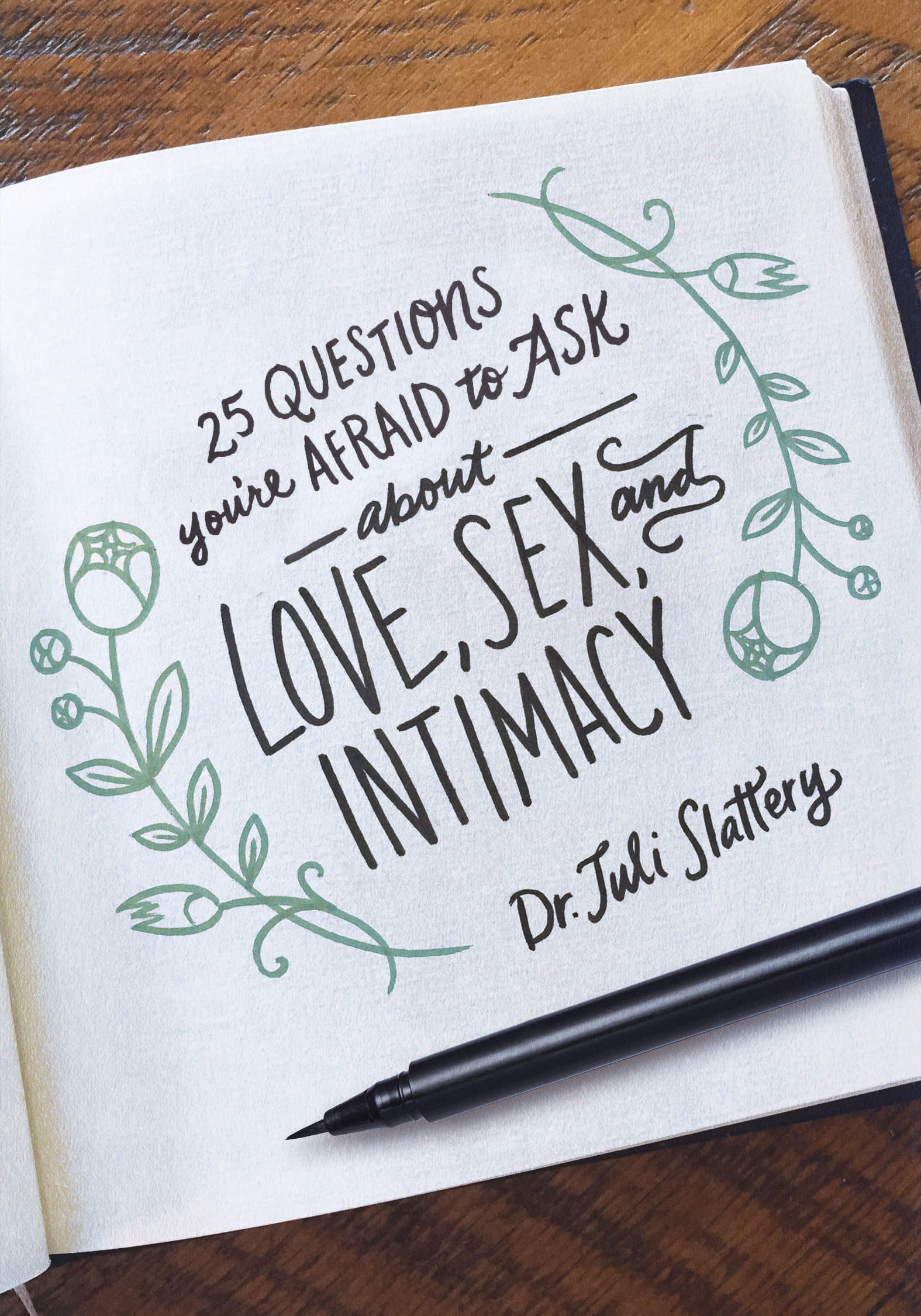
Hot-off-the-presses of Moody Publishers is this new book by Dr. Juli Slattery:

25 Questions You’re Afraid to Ask about Love, Sex, and Intimacy.

25 Questions

If Juli’s name is familiar to you, you may recall that Dr. Slattery was Dr. Dobson’s cohost on Focus on the Family from 2010-2012. A clinical psychologist, Juli has been married for almost 20 years, and she is the mother of three boys.

25 Questions

25 Questions You’re Afraid to Ask is easy to read and well organized. Each chapter in this paperback book is fairly short. (The longest is only nine pages.) Written in a stand-alone style, the chapters may be read in any order. The material is very practical and certainly relevant to many. Although the book addresses women, much of the discussion would be just as applicable to men.

Do I recommend this book?

Absolutely.

I recommend 25 Questions because Juli’s counsel is solidly grounded in Scripture. We may ask the 25 questions with fear, but Juli answers them with grace and insight.

Juli treads a couple “gray areas” more tentatively than I would. Once or twice, she uses a broader brush than I would have chosen, but I agree with her conclusions. Her advice is godly, springing not only from personal experience and extensive counseling, but especially from the wisdom of Scripture.

Here are some of the questions that we’re afraid to ask:

  1. What’s the big deal about sex?
  2. Who are you to judge my sexual choices?
  3. Can I be single and sexual?
  4. Is it wrong to like sex?
  5. And I waited for this?
  6. Why do guys care so much about sex?
  7. Is ____ okay in the bedroom? (You fill in the blank!)
  8. What do my temptations say about me?
  9. How do I get past my shame?
  10. How do I know he is the one?
  11. How far is too far?
  12. Is living together a good test run for marriage?
  13. What if I’m attracted to someone else?
  14. How can I compete with porn?
  15. Can I be godly and gay?
  16. How do I rebuild trust after a betrayal?
  17. Does forgiveness mean I’ll be hurt again?
  18. What if I don’t like sex?
  19. How do I make time to make love?
  20. How do we fight without hurting each other?
  21. Why wouldn’t God want me to be happy?

Over the next couple weeks, I will be sharing a few “choice nuggets” from 25 Questions and summarizing several of Juli’s responses.

Interested in a copy?Image courtesy of digitalart at FreeDigitalPhotos.net

Compliments of Moody Publishers, I am able to give away one copy of 25 Questions.  If you would like a chance to receive this book, simply leave a reply to this post, and your name will be entered into the drawing.

There will be another chance to enter the drawing again next week.  You may enter more than once.

Blessings to you!
Tami

————————————————————————-
Image courtesy of digitalart at FreeDigitalPhotos.net


Forgiveness as Resurrection

Jesus was not the first person to be raised from the dead.

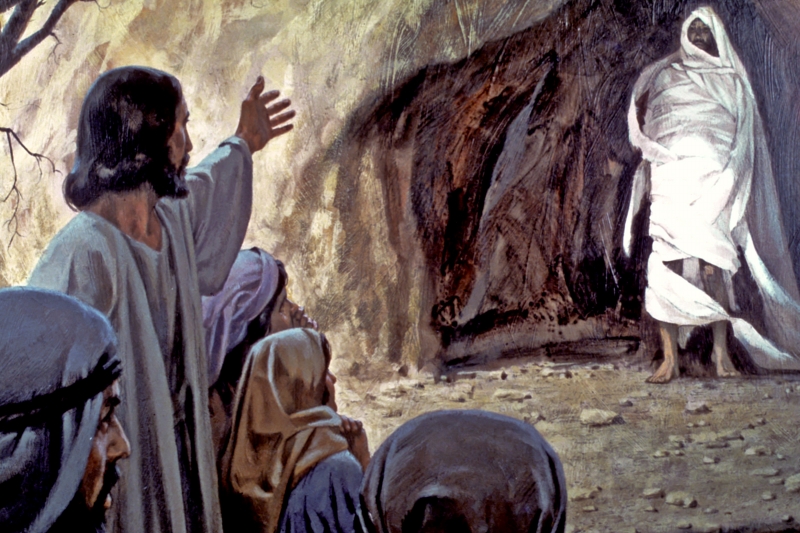
forgivenessHis disciples had seen Lazarus walk out of a tomb after being dead for four days. They had seen Jesus lift a dead boy out of his coffin and back into life.

But as amazing as those things were, they did not affect the disciples the way the resurrection of Jesus did. Seeing the resurrected Christ changed His followers dramatically. They became obsessed with the resurrection of Christ. The resurrection  became the basis for their faith and the driving force for their lives.

The resurrection of Christ is absolutely unique in all of history:

Others were raised from the dead, but Jesus Christ raised Himself.[i]

He defeated death from within.

Before He died, Jesus made this startling prediction: “Destroy this temple [that is, my body], and in three days I will raise it up” (John 2:19-22, NIV). Jesus told His disciples, “No one takes [my life] from me, but I lay it down of my own accord. I have authority to lay it down and authority to take it up again” (John 10:18, NIV).

forgiveness

Christ chose to walk into death and then to walk back out, demonstrating a power greater than the power of death. Lazarus and others were given a temporary reprieve from death: they were retrieved from death for a while, but then they died again.

But Christ won more than a postponement; He actually conquered death. He faced it head-on and completely dominated it.

The core of our faith, just like that of the early believers, is the Resurrection of Christ. Death is the fierce power of our sin, but there is a power that is even greater: the purity, the deity, and the love of Christ constitute an absolutely unsurpassed power.

We sometimes fear that forgiving means surrender or passivity. Nothing could be farther from the truth:

Forgiveness is looking evil in the eye, calling it what it is, and then proclaiming victory.

Forgiveness rises taller and stronger than the evil that came against it. It removes the “sting” of evil by removing the harm from the hurt[ii]. It removes the poison of bitterness and the curse of resentment.
forgivenessWhen we are hurt by others, we experience something like a death: there is a kind of grieving, perhaps the ending of a relationship as it had been, and there may even be—as Lazarus’ sister pointed out—a “bad smell” to the whole affair. But forgiveness says, “This is not the end of the story.”

After His crucifixion, the body of Christ was placed in a borrowed tomb, not His own. Similarly, forgiving involves walking into someone else’s evil, not our own. We stand for a moment in the dark “tomb” of someone else’s sin, but then, like Christ, we choose to walk out into the garden, where the Spirit makes all things new.AAM8X0DRXY

This is why Christ-followers must forgive:

Forgiveness is the Resurrection again.

A49952BF7AForgiveness is first the Cross raised as an identifying banner over us. Forgiveness is then the Resurrection, demonstrating the power of the Spirit of God within us. He brings the power to obliterate evil and to transform ashes into beauty.

3C2AEB6A2A

When given the opportunity to forgive, we can respond to our debtors with these truths in our hearts:

You hurt me, but I will not hurt you back.

My willingness to forgive you is my willingness for God to forgive me.

When God poured out the riches of His grace to me, He included all the grace that I would need to pass on to you.

I do not seek your punishment. I seek your redemption and your healing.

5FS7RIUMKC

How has forgiveness brought Resurrection power into your life?

Blessings to you,
Tami

{Read Part One of this series here: A Spiritual WMD.
Read Part Two here: Forgiveness as Self-Help?
And read Part Three here: Forgiveness: A Power Way to Hold Out the Cross.}

—————————————————-

[i] The Resurrection was an awesome performance of the Trinity, the Son acting in concert with the Father (Galatians 1:1) and the Spirit (Romans 8:11).
[ii] 1 Corinthians 15:55

Forgiveness: A Powerful Way to Hold Out the Cross

Bitterness can destroy us.

We understand that.

But do we understand why? Why does our refusal to forgive cause such serious harm to us?

Unforgiveness deforms us because it is rooted in a lie.

As with all sin, it binds us in spiritual enslavement because bitterness denies the truth that sets us free.

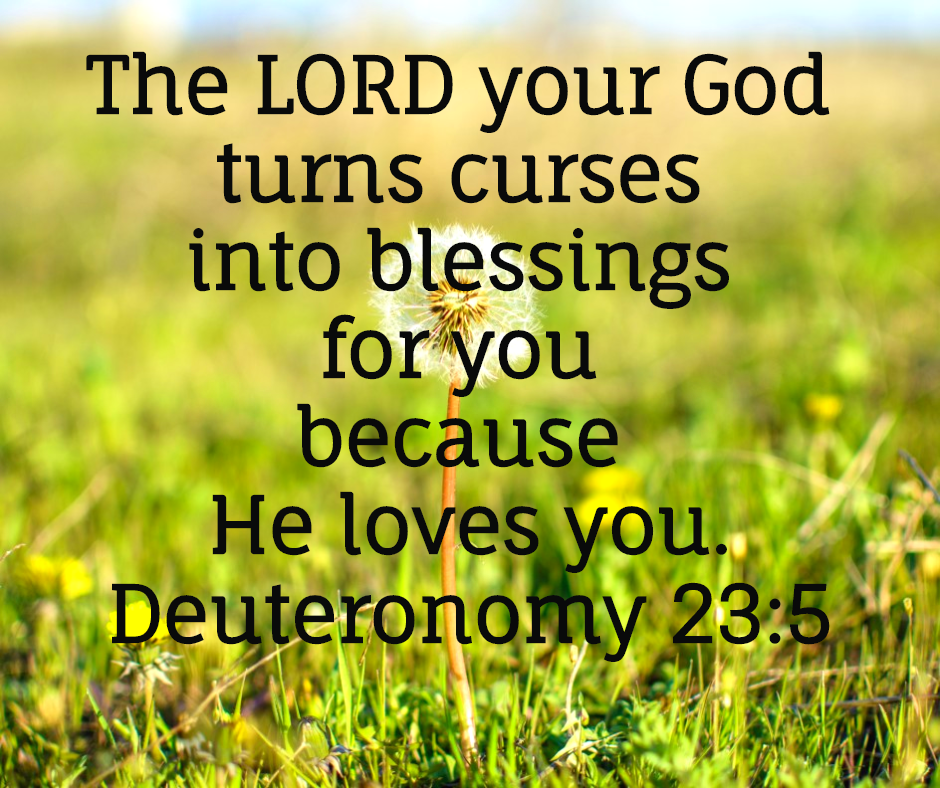
Resentment denies the truth of Deuteronomy 23:5, which says that God turns curses into blessings for us because He loves us.

forgiveness

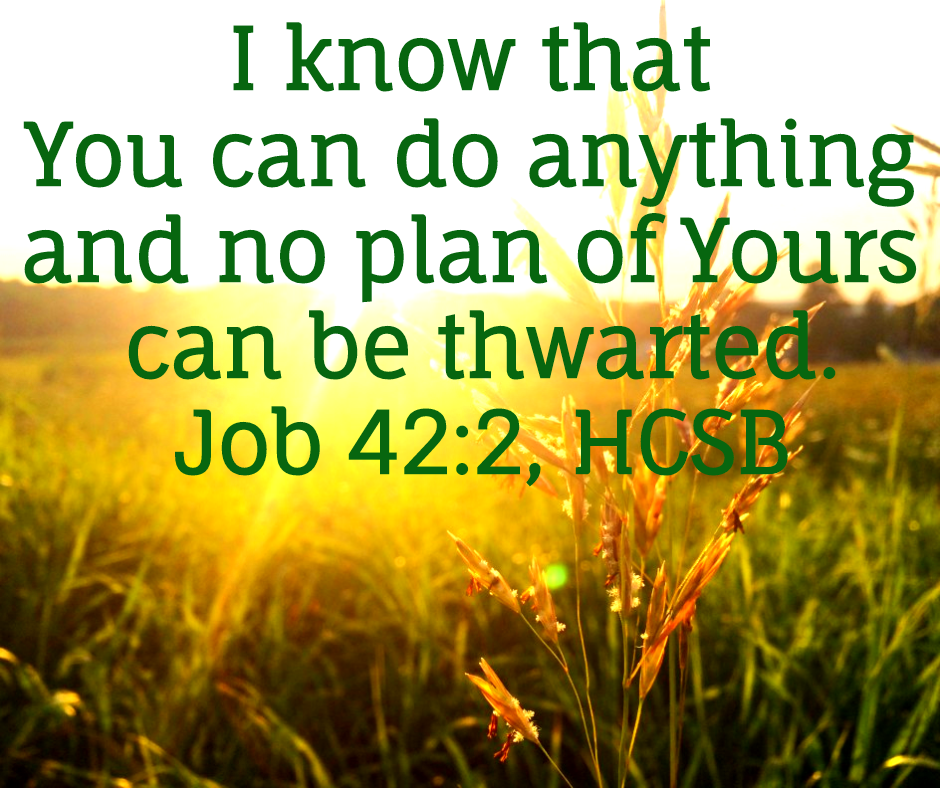
It denies the truth of Jeremiah 29:11 and Job 24:2, which assure us that God’s plans for us are good and that they cannot be thwarted.

forgiveness

Bitterness also denies this startling truth: as forgiven Christ-followers, we do not have the right not to forgive. The liberating truth is that the spiritual work of atonement is finished. Physical consequences may still apply, but spiritual justice has been satisfied.

Bitterness cries out for justice. Forgiveness recognizes that spiritual justice has been served.

Forgiveness is not a matter of deciding not to press charges; it is a matter of recognizing that charges have already been settled. As I recognize that a penalty has already been paid, I can say to the one who has wronged me, “You do not owe me.” Spirit to spirit, there is no debt. Insisting on payment would actually be further injustice.

At the foot of the Cross, I stand next to those who have wronged me, for we are all sinners alike. If the blood flowing down from the pierced body of Christ is insufficient to reach my debtors beside me, then it does not reach me, either, for my sins against God far exceed the sins committed against me.

forgivenessForgiveness is full of power because it is full of truth: it is agreeing with God that the debt has been paid.

Justice has been written with whips and nails across the flesh of Christ. The full wrath of God poured out at Calvary even as red blood poured out.

Forgiveness is not something we choose to do as much as it is something we acknowledge: we recognize that the punishment for every wrong and every evil has been lashed and deeply striped across the back of Jesus.

The choice we must make is not whether or not we will forgive:

The choice we must make is whether or not we will be people of the Cross. If we choose to stand in the shadow of the Cross, then every facet of our lives also comes under that shadow of atonement.

Forgiveness, then, is not an isolated event or an extraordinary choice that we make. It is the air we breathe as believers; it is the rule of the Kingdom. It is the seamless way we live, for the Forgiving God lives within us. To deny forgiveness to someone else is to quench the Spirit within us.

It is not being wronged that disrupts the well-being of our spirits; the festering infection within us is our refusal to forgive. When I struggle to forgive someone, I am not wrestling with the one who wronged me as much as I am wrestling with the God who forgave me. My bitterness is my own rebellion against God.

God forgives us not because He denies our wrong or excuses it. He forgives our evil because He has paid the price for it. In fact, Hebrews 9:22 tells us that without the shedding of blood, there is no forgiveness. Every time we forgive, we are holding out the Cross and saying again, “It is finished.” The paying is finished.

It is the power of the Cross of Christ to move us from a place of punishment to a place of redemption. The work of transformation and restoration remains, but the work of atonement is finished.

forgivenessAs we forgive, we move from seeking punishment to seeking redemption.

Forgiving is the stamp of the Spirit upon our spirit, and it a powerful new proclaiming of the gospel. This “good news” declares that, although evil has been committed, justice has been satisfied. What remains is an invitation to healing and restoration.

Forgiveness says, “Although I have been hurt, I will not hurt you back.”

Forgiveness also says, “I will not feel sorry for myself.” This is possible because we know that God redeems our pain fully. “For our momentary light affliction is producing for us an absolutely incomparable eternal weight of glory” (2 Corinthians 4:17, HSCB).

I do not have to deny my pain or someone else’s evil in order to forgive. I do not have to wrestle with my emotions. Instead, I simply lay down the stone that I had wanted to throw in punishment, I walk away from my pity party, and I stand in the shadow of the Cross. And suddenly, I realize that I have forgiven.

The apostle Paul asked his friend Philemon to forgive Onesimus, the slave who had stolen from Philemon. Paul made this remarkable promise to Philemon:

If [Onesimus] has wronged you in any way or owes you anything, charge it to me. I, PAUL, WRITE THIS WITH MY OWN HAND: I WILL REPAY IT. AND I WON’T MENTION THAT YOU OWE ME YOUR VERY SOUL! (Philemon 18-19, NLT)

Paul was saying, “You can forgive this debt, Philemon, because I will pay it.” Paul said this because he knew that God had said the same thing to him.

When we are wronged, we can hear God say these very words to us, too. We can forgive our debtors because God has promised to repay us. He will repay what has been taken from us—and even more.

(This is the third in a series on forgiveness.  You can read Part One here: A Spiritual WMD, and you can find Part Two here: Forgiveness as Self-Help? There will be one more section, so stay tuned.)

Blessings to you,
Tami