 Does anyone remember reading about Eleazar, the son of Dodai the Ahohite? Probably not–but he was an incredible warrior, one whom we would do well to consider. According to Old Testament accounts, Eleazar was one of David’s “mighty men.” In a battle against the Philistines one day, “the men of Israel retreated, but Eleazar stood his ground.” Not only did he stand his ground in the middle of a barley field, bravely facing the enemy onslaught, but he “struck down the Philistines till his hand grew tired and froze to the sword.” And here’s the rest of the story: “The LORD brought about a great victory that day. The troops returned to Eleazar, but only to strip the dead.” (2 Samuel 23:9-10, NIV)
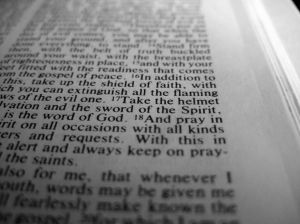 Perhaps you are an Eleazar, fighting spiritual opposition and feeling overwhelmed in the battle. Perhaps there are those who should be standing with you but who have retreated instead. As you stand there, keep your hand on your sword, which is the Word of God. Keep your hand frozen to the sword. Don’t let go of the Scriptures for even a moment; hold on to its promises and commands and prayers.
Eleazar must have known that dropping his sword or even loosening his grip on it would have meant defeat for his cause and certain death for himself. We, too, must know that our spiritual well-being and success depend on this sword of God’s Word: we conquer by clinging to its truth, or we suffer defeat by losing our grip on it.
Stand strong, “Eleazar.” Though your hand grow tired, keep it frozen to your sword. “And the LORD will bring about a great victory.




 Tami Myer