King David of Old Testament fame earned stellar marks as a musician, warrior, and king; but as a family man, he quite nearly flunked. However, on the day that he brought the ark of the covenant to Jerusalem, he dramatically demonstrated several characteristics of a godly husband and father:
1. David set aside his royal robes of position and put on the linen robes of a priest (1 Chronicles 15:27). Successful husbands and fathers do this when they lay aside their “I am the boss!” robes to wear the priestly ephod of service. As priests, these men bring the needs of their families to God, and they bring the holiness of God to their families.
2. David honored God by honoring the ark of the covenant; David clearly placed high value on the things of God (1 Chronicles 16:1). Successful leaders in the home evidence great reverence for God and spiritual matters.
3. David celebrated and worshiped God with all his heart (2 Samuel 6:14). Now that is excellent leadership right there! A leader in the home is powerful when his family watches him worship God with his whole heart and with great joy. (Dancing in the street, as David did, is optional.)
4. David offered sacrifices on behalf of his nation, just as godly leaders are willing to make sacrifices for the good of their families (1 Chronicles 16:2; Job 1:5).
5. David blessed the people and gave them gifts of food and of joy (1 Chronicles 16:3). Can anything compare with the blessing of a godly father? A strong leader speaks blessing into the lives of his family, and he supplies for them both provision and celebration.
6. David took responsibility to ensure regular observation of prayer, thanksgiving, and praise (1 Chronicles 16:4). Successful men do the same for their families.
On this special occasion, David served as a commendable leader for Israel, and he would have done well to have shown the same type of leadership in his family. Men today who exercise godly leadership in the home are worthy of our applause and respect. They surpass King David in this area, whether they dance or not.
In reading “my new favorite book on marriage,” I was interested to discover an entire chapter devoted to the topic of anger. Author John Piper bases much of his discussion in This Momentary Marriage on the Biblical directives given in Ephesians 5:21 through 6:4. When the apostle Paul speaks to fathers in this passage, he gives one strong warning: “do not provoke your children to anger.” Of all the things that Paul could tell fathers, why does he choose this one thing? Piper recognizes that anger is being highlighted here as a critical issue in the home.
As Piper points out, anger “devours almost all other good emotions. It deadens the soul. It numbs the heart to joy and gratitude and hope and tenderness and compassion and kindness.” When we work to conquer anger, not only are we freed of that misery, but we also “unlock” our hearts “to a dozen other precious emotions that make worship possible and make relationships sweet” (page 150).
There are three things that help me to combat anger and gain richness instead. Here are the first two:
1. Recognize that my anger is the enemy, not what someone else has said or done. It is my bitterness that devours my own soul, and it is my resentment that is bringing harm to me. Anger is destructive when it is based on lies. We often choose to believe the lie that someone else is messing things up for us. But the truth is that every single thing that comes into my life, whether it is a trivial frustration or a horrible evil, can be used by God to advance His trustworthy purposes. Everything that God has allowed to enter my life has been charged by God to prosper me.
2. Choose to be an active giver, believing that choosing to give is a great gift to myself as well as to the other person. I can choose to give grace, forgiveness, patience, acceptance, and honor. I can consciously choose to walk in love toward someone when my natural reaction would actually be to run away or to attack. When I choose to walk toward another in love, powerful things happen in the spiritual realm: the enemy is weakened, strongholds collapse, chains of bondage are broken, and captives are set free.
When we are mistreated or misunderstood or unappreciated, we gain an even greater opportunity to give and to create spiritual impact. That is why James says that we can “consider it pure joy” when we encounter problems or pain. Situations that tempt us to be angry are the very opportunities that allow us to give so that we are enriched. Our spirits are naturally ingrown—a condition which leads to decay and death. Giving is what heals the sickness of our spirits.
(We’ll look at a third way to combat anger next time.)
Have you ever celebrated Pentecost in your home? This coming Sunday is Pentecost, which God gave to us as a special day of rejoicing (Deut. 16:11). Observing Pentecost with your family or friends can be a wonderful celebration. Although Pentecost is not a complicated celebration, it is one of great joy.
Pentecost was one of the seven feasts that God instructed the ancient Israelites to observe (and one of the three which required mandatory attendance in Jerusalem). Pentecost is a time to rejoice in God’s goodness to us. At Pentecost, we celebrate three gifts:
1. The gift of the Scriptures. Pentecost is held fifty days after Passover. (Pentecost means “fifty.”) Fifty days after the first Passover in Egypt, the Israelites were at Mount Sinai. With loud sounds and with fire, God gave the Law and the Ten Commandments on Pentecost as part of the first covenant. God told the people to present to the LORD two loaves of bread as part of the Pentecost offerings. This bread, unlike the Passover bread, was “baked with yeast” (Lev. 23:17). The first thing we celebrate are the Scriptures that God has given to us. These words that are not just idle words—they are life to us (Deut. 32:4). Like bread, they are nourishing to our spirits; like honey, they are sweet to our souls; like a lamp, they guide us.
2. The gift of the Holy Spirit. Fifty days after Jesus gave Himself as the Passover Lamb of God, the disciples were in Jerusalem on the day of Pentecost. With loud sounds and with fire, God gave the Holy Spirit on Pentecost as part of the new covenant. So the second thing we celebrate is the Holy Spirit, who gives us boldness, comfort, power, and instruction.
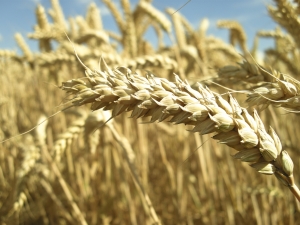
3. The gift of the spring harvest, and the promise of the fall harvest. Pentecost in ancient Israel occurred at the time of the wheat harvest in the spring. When the Jews gave their “firstfruits” as offerings to God during this festival, they were thanking God for the spring harvest as well as for the coming fall harvest. Pentecost is a “firstfruits” celebration for us, too, meaning that we are offering to God our first and best–not our leftovers–both as an expression of gratitude for what He has given and also as a statement of confidence that He will provide again.
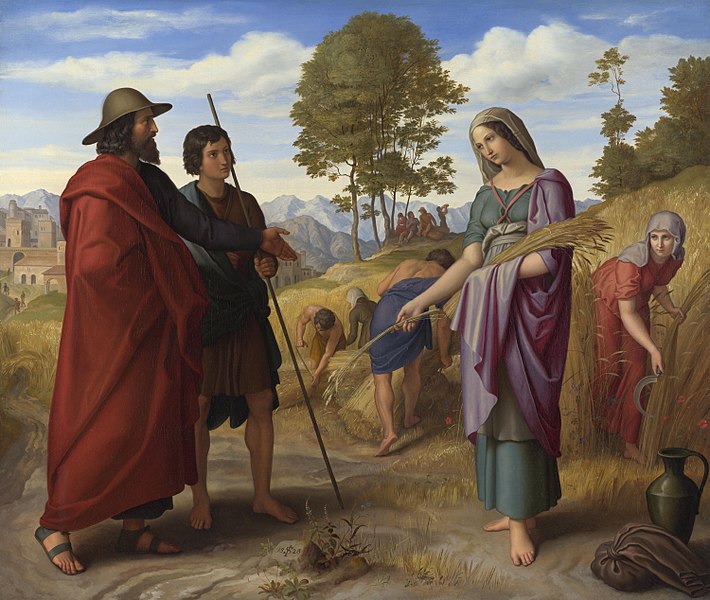
The Jewish people traditionally read the book of Ruth on Pentecost because most of the story of Boaz and Ruth occurred during the spring harvest in Bethlehem (which means “house of bread”). God gave Boaz and Ruth good things in their lives, such as a son, a grandson, and a great grandson, King David–this was a “spring harvest.” These blessings were also promises of abundant good things still to come: the Messiah came through their family line!
We learn in Acts 2 that on the day of Pentecost, after the disciples received the Holy Spirit, three thousand people became followers of Christ. This was an “harvest” of souls–an abundant spring harvest! It gives us confidence that God will also bring the “fall harvest” that He has promised.
An interesting Jewish tradition on Pentecost is to read from Ezekiel 1, a passage which refers to a great windstorm and to fire. Perhaps these images were in the disciples’ thoughts as they then encountered for themselves the sound of a mighty wind and the sight of fire. In the excellent book God’s Appointed Times, Barney Kasdan makes these comments:
Imagine thousands of Jewish worshipers leaving the Temple after the morning service (at the third hour, Acts 2:15) having just read the passage from Ezekiel 1. Suddenly some of the same manifestations of the Holy Spirit started to appear before their eyes! No wonder they were amazed and perplexed by the windstorm and fire. It certainly got their attention! They must have wondered if God was revealing his Shekinah glory for the first time in early 600 years! The glory of God was present at the giving of the Law; the same glory was manifested at the giving of the holy spirit. The prophet later wrote: “I will put my Spirit in you and cause you to walk in my statutes…” (Ezekiel 36:27). *
It is fascinating, too, to see in Romans 8:23 that the Holy Spirit is referred to as “firstfruits,” that is, He is God’s good gift to us, and He is also a promise of the abundance of good gifts still to come.
So how can we celebrate all of this on Sunday? Here are some simple ideas, which you can either simplify or embellish.
1. Decorate (optional): Use flowers, greenery, or other decorations to represent spring. Perhaps using your best dishes will make the time more festive. If you have something that symbolizes harvest (such as wheat, barley, or fruit), that would be great, too.
2. Celebrate the Scriptures: Serve bread, and talk about how the Scriptures nourish us. Read Deuteronomy 8:3. Serve honey (or jam for children under 2), and talk about how the Scriptures are sweet to us. Read Psalm 119:103. Light candles or use flashlights as you discuss how the Scriptures are like light for us. Read Psalm 119:105. You may also want to read Psalm 19:7-11.
3. Celebrate the Spirit: Express thankfulness for God’s gift of the Holy Spirit. You might read Acts 2:1-4 and Romans 8:5-16. Other verses about the Holy Spirit that you may want to read are John 14:16-17, 26.
4. Celebrate the harvests: You may want to serve barley soup as a reminder of the spring harvest. (You can easily add barley to vegetable soup or to beef-and-vegetable soup.) Thank God for what He has provided for you and your family recently (the spring harvest), and thank Him that He is going to provide in the future (the fall harvest). Read Acts 2:38-41, noticing the spring harvest of souls. Perhaps you will want to pray for more laborers to work in the harvest fields (Matthew 9:38) and for God to bring an abundant fall harvest of people who will love Him.
Happy Pentecost!
*Barney Kasdah. God’s Appointed Times: A Practical Guide for Understanding and Celebrating the Biblical Holidays. Clarksville, Maryland: Lederer Books. 1993. pages 55-56.








 Tami Myer