Archives

Forgiveness: A Powerful Way to Hold Out the Cross

Bitterness can destroy us.

We understand that.

But do we understand why? Why does our refusal to forgive cause such serious harm to us?

Unforgiveness deforms us because it is rooted in a lie.

As with all sin, it binds us in spiritual enslavement because bitterness denies the truth that sets us free.

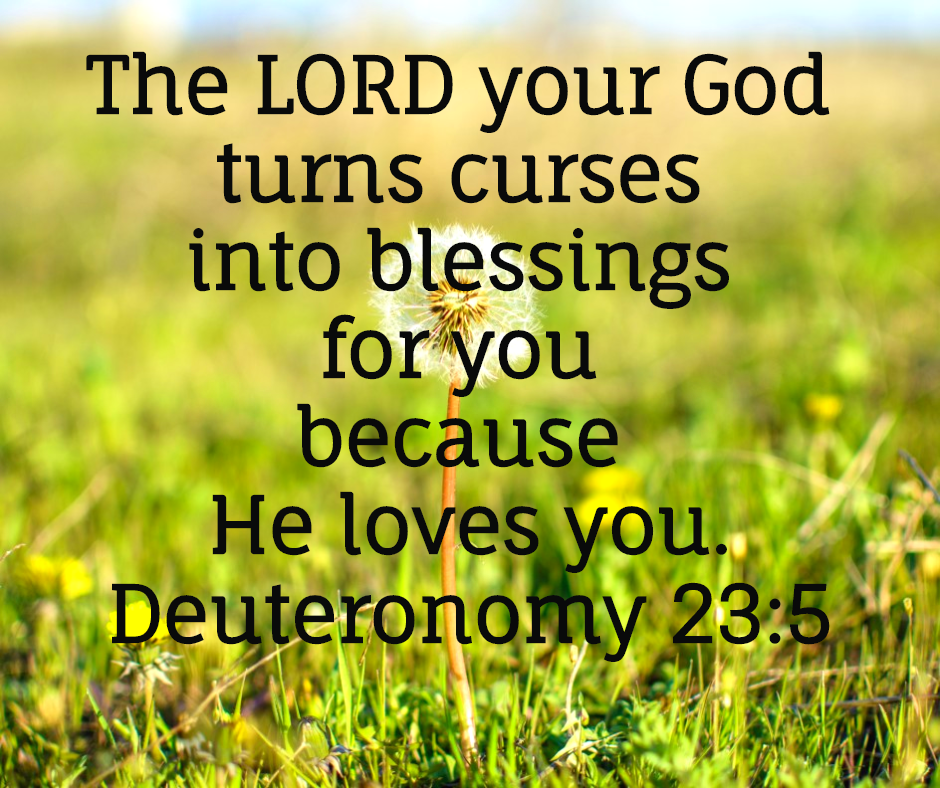
Resentment denies the truth of Deuteronomy 23:5, which says that God turns curses into blessings for us because He loves us.
forgiveness

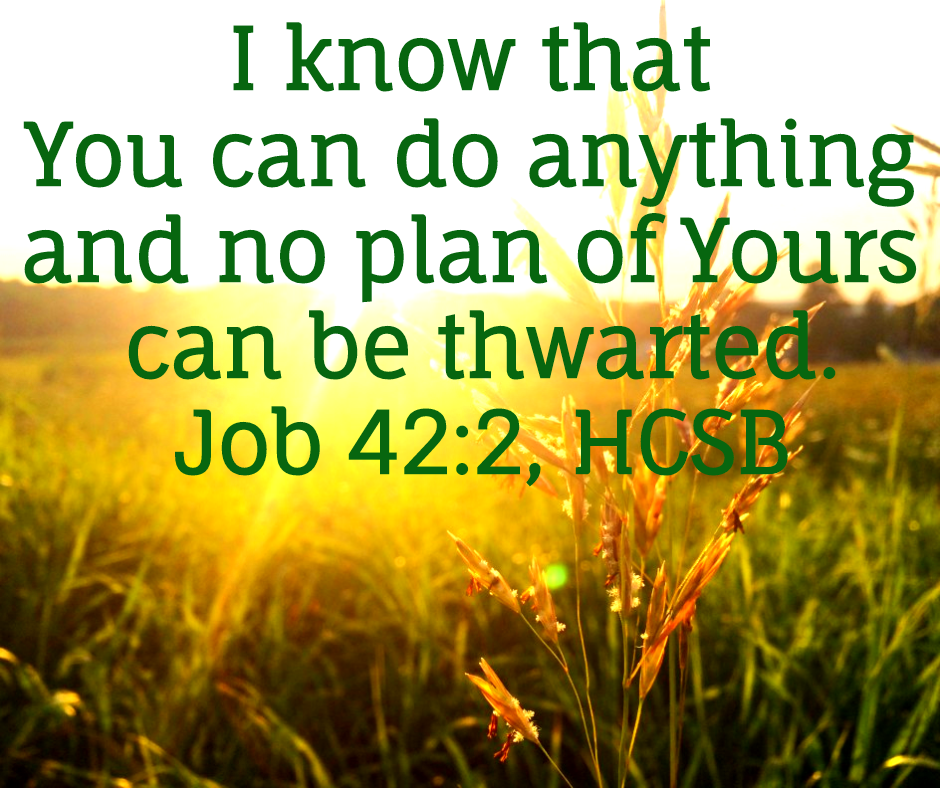
It denies the truth of Jeremiah 29:11 and Job 24:2, which assure us that God’s plans for us are good and that they cannot be thwarted.
forgiveness

Bitterness also denies this startling truth: as forgiven Christ-followers, we do not have the right not to forgive. The liberating truth is that the spiritual work of atonement is finished. Physical consequences may still apply, but spiritual justice has been satisfied.

Bitterness cries out for justice. Forgiveness recognizes that spiritual justice has been served.

Forgiveness is not a matter of deciding not to press charges; it is a matter of recognizing that charges have already been settled. As I recognize that a penalty has already been paid, I can say to the one who has wronged me, “You do not owe me.” Spirit to spirit, there is no debt. Insisting on payment would actually be further injustice.

At the foot of the Cross, I stand next to those who have wronged me, for we are all sinners alike. If the blood flowing down from the pierced body of Christ is insufficient to reach my debtors beside me, then it does not reach me, either, for my sins against God far exceed the sins committed against me.

forgivenessForgiveness is full of power because it is full of truth: it is agreeing with God that the debt has been paid.

Justice has been written with whips and nails across the flesh of Christ. The full wrath of God poured out at Calvary even as red blood poured out.

Forgiveness is not something we choose to do as much as it is something we acknowledge: we recognize that the punishment for every wrong and every evil has been lashed and deeply striped across the back of Jesus.

The choice we must make is not whether or not we will forgive:

The choice we must make is whether or not we will be people of the Cross. If we choose to stand in the shadow of the Cross, then every facet of our lives also comes under that shadow of atonement.

Forgiveness, then, is not an isolated event or an extraordinary choice that we make. It is the air we breathe as believers; it is the rule of the Kingdom. It is the seamless way we live, for the Forgiving God lives within us. To deny forgiveness to someone else is to quench the Spirit within us.

It is not being wronged that disrupts the well-being of our spirits; the festering infection within us is our refusal to forgive. When I struggle to forgive someone, I am not wrestling with the one who wronged me as much as I am wrestling with the God who forgave me. My bitterness is my own rebellion against God.

God forgives us not because He denies our wrong or excuses it. He forgives our evil because He has paid the price for it. In fact, Hebrews 9:22 tells us that without the shedding of blood, there is no forgiveness. Every time we forgive, we are holding out the Cross and saying again, “It is finished.” The paying is finished.

It is the power of the Cross of Christ to move us from a place of punishment to a place of redemption. The work of transformation and restoration remains, but the work of atonement is finished.

forgivenessAs we forgive, we move from seeking punishment to seeking redemption.

Forgiving is the stamp of the Spirit upon our spirit, and it a powerful new proclaiming of the gospel. This “good news” declares that, although evil has been committed, justice has been satisfied. What remains is an invitation to healing and restoration.

Forgiveness says, “Although I have been hurt, I will not hurt you back.”

Forgiveness also says, “I will not feel sorry for myself.” This is possible because we know that God redeems our pain fully. “For our momentary light affliction is producing for us an absolutely incomparable eternal weight of glory” (2 Corinthians 4:17, HSCB).

I do not have to deny my pain or someone else’s evil in order to forgive. I do not have to wrestle with my emotions. Instead, I simply lay down the stone that I had wanted to throw in punishment, I walk away from my pity party, and I stand in the shadow of the Cross. And suddenly, I realize that I have forgiven.

The apostle Paul asked his friend Philemon to forgive Onesimus, the slave who had stolen from Philemon. Paul made this remarkable promise to Philemon:

If [Onesimus] has wronged you in any way or owes you anything, charge it to me. I, PAUL, WRITE THIS WITH MY OWN HAND: I WILL REPAY IT. AND I WON’T MENTION THAT YOU OWE ME YOUR VERY SOUL! (Philemon 18-19, NLT)

Paul was saying, “You can forgive this debt, Philemon, because I will pay it.” Paul said this because he knew that God had said the same thing to him.

When we are wronged, we can hear God say these very words to us, too. We can forgive our debtors because God has promised to repay us. He will repay what has been taken from us—and even more.

(This is the third in a series on forgiveness.  You can read Part One here: A Spiritual WMD, and you can find Part Two here: Forgiveness as Self-Help? There will be one more section, so stay tuned.)

Blessings to you,
Tami


Forgiveness as Self-Help?

Last week, I discussed forgiveness as a “weapon of mass destruction,” recognizing its immense spiritual power. Today, I would like to continue with this theme of forgiveness, evaluating its current popularity as therapeutic self-help. (If you missed last week’s post, you can read it HERE.)

————————————————————-

Trendy Self-Help

Interestingly, forgiveness has received a lot of positive press lately in mainstream culture. “Forgiveness is good for you” is a trending theme promoted by all kinds of secular sources, including physicians, psychologists, news outlets, and entertainment media. We can appreciate and even applaud this surge of support for forgiveness.

However, if we forgive only for our own sakes, then the power of forgiveness is stunted. True forgiveness is not primarily a self-help strategy, although we do benefit when we forgive. The tremendous dynamo of forgiveness is activated most fully when our motivation is grounded in truth and in love.

Diluting and Defusing Forgiveness

forgivenessIf we dilute our forgiveness by forgiving others for our own gain, then we lessen the impact of love upon the wrongdoer. We defuse the spiritual combustion that could have wreaked greater havoc on enemy forces.

Leslie Leyland Fields has written about the “therapeutic forgiveness message,” quoting those who say, “Forgiveness is a gift you give yourself.” She recalls Jesus’s parable of the unmerciful servant who was forgiven a large debt but who then refused to forgive someone else’s small debt:

That man with massive debts who is called before the king is us. We’re hopeless before the holy King. We stand there shoulder to shoulder with every other debtor, even those who owe us money and honor and … love. … Our only hope is the King himself, and he does it. He clears our debts entirely. … [The man in the parable] misses this essential fact: Forgiveness is not for his personal freedom and happiness alone. It’s to bring freedom and restoration to all, especially to those who owe him. … We may begin the journey of forgiveness to ease our own burdens. But along the way we discover a chance to live out the fullness of the gospel: loving the unlovely, forgiving seventy times seven. In so doing, we reflect the kingdom of God among us.[i]

Self-Help for God?

forgivenessDoes God forgive us so that He can give Himself a gift? No, at great cost to Himself, He forgives us so that we can receive a gift. He forgives us so that we can be changed through the power of love.

When we are given opportunities to forgive, we are being privileged to reflect God in a dramatic way.

Blessings to you,
Tami


[i] “What We Forgot About Forgiveness.” Christianity Today. May 2014. 30-35.

A Spiritual WMD

You’ve heard of a “weapon of mass destruction.”  Do you think there could be something like a spiritual WMD?

forgivenessI recently read the astonishing biography of Jacob DeShazer, one of the courageous Doolittle Raiders.[i] Led by Lieutenant Colonel James Doolittle, these American airmen were the first to bomb Japan after the Japanese bombing of Pearl Harbor in 1941. When DeShazer’s plane crashed after the raid, he was captured by the Japanese and tortured as a POW for 40 months. Through reading a Bible, Jacob became a follower of Christ and “a new creation.”[ii] After the war ended, Jacob was able to express love and sincere forgiveness to his former cruel guards and to the Japanese people.

Captain Fuchida was the Japanese airman who had led the attack on Pearl Harbor. After the war, Captain Fuchida was convinced that everyone, regardless of nationality, was motivated by revenge toward one’s enemies. However, as he tried to gather evidence of this, he was astounded to learn that DeShazer and other Christians were showing kindness and extending forgiveness to those who had mistreated them. When DeShazer returned to Japan as a missionary in 1948, Captain Fuchida was eager to speak with him.

What happened then is incredible: DeShazer, an American who had been part of the first bombing of Japan, was able to lead to Christ the Japanese man who had led the attack on Pearl Harbor! The spiritual explosion of forgiveness had transformed hatred into love. Together, Jacob DeShazer and Captain Fuchida shared the gospel with thousands of Japanese, many of whom also accepted Christ as their Lord.

When Christ died on the cross, the most profound fission in the universe occurred as the Father was separated from the Son.

This breaking-apart of the triune God was far more fantastic than the splitting of an atom. What a massive explosion occurred in the spiritual realm! It is no wonder that darkness fell across the land and the ground shook.forgiveness

The power generated by that fission destroyed the fierce stranglehold of Death upon men and women. As Wesley Hill puts it, the death of Christ “broke death’s power forever because it was the death of the Deathless One.”[iii]

The immense release of Divine Energy at Calvary was sufficient to fulfill the old covenant of earning and, at the same time, to establish the new covenant of receiving. Just as a split rock released thirst-quenching water for the ancient Israelites, so the broken body of God released life-saving atonement for a dying humanity.

The rending of the heart of God preceded the stunning cohesion of reconciliation. Just as extreme nuclear reactions often involve both fission and fusion, so the spiritual dynamics of forgiveness also involve both fission and fusion. When we forgive, we must forcefully separate from our natural desire for retaliation and revenge. We then yield to a fusion of our will with the will of God. This is not a passive, insignificant act: this creates a powerful reaction in the spiritual realm.

Each time we forgive through the work of the Spirit, there is a devastation of the works of the enemy.

forgiveness

Not only are forces of darkness defeated, but there is also a mighty unleashing of spiritual energy for our own healing, for the redemption of others, and for the restoration of relationships.

If we want to strike a crippling blow against satanic forces–if we want to advance the kingdom of God–then let’s bring out the “big guns” and forgive. Let’s unleash the explosive light of forgiveness so that the forces of darkness are trounced.

How has forgiveness been powerful in your life?

Thank you very much for your comments! It is always good to hear your feedback. PLEASE NOTE: When you reply to this newsletter email, your comments are posted on the website, and I reply to you there.

Blessings to you,
Tami

(This is the first segment in a series on forgiveness.)

———————————————————

[i] Jacob DeShazer: Forgive Your Enemies. 2009. YWAM.

[ii] 2 Corinthians 5:17

[iii]The Best Christian Paradox.” Christianity Today. May 2015. 28.

———————————————————

Image courtesy of Naypong at FreeDigitalPhotos.net
Image courtesy of renjith krishnan at FreeDigitalPhotos.net