Archives

The Dancing King … had a Demolishing Queen (continued)

You may have guessed that we would not be able to watch the dancing king without noticing the seething shadow up in the palace window. If the king had noticed, it may have been because he felt the scathing heat of that shadow reaching him even in the streets below.

When King David brought the ark of the covenant to Jerusalem, he set a great example for his people by worshiping God with gratitude and with celebration. However, on the same day, his wife Michal set a very different kind of example: she modeled for wives what not to do. With one caustic sentence, she tore down her marriage “with her own hands” (Proverbs 14:1). With bitterness, she belittled. With contempt, she criticized. With disdain, she despised. Michal accused David of not knowing how to be a king, but the truth was that Michal did not know how to treat a king! As a result, Michal suffered immense heartache and personal loss.

Just as husbands can learn from David in verses 12-19 of 2 Chronicles 16, so wives can learn from Michal in verse 20. A woman is wise who guards against sarcasm, scolding, and scorn–not only in words, but also in thought. Unlike Michal, a godly wife uses life-giving words and a respectful attitude to “build her house.” In that kind of house, the hearts of both the king and the queen can dance.

The Leadership Skills of a Dancing King

King David of Old Testament fame earned stellar marks as a musician, warrior, and king; but as a family man, he quite nearly flunked. However, on the day that he brought the ark of the covenant to Jerusalem, he dramatically demonstrated several characteristics of a godly husband and father:

English: The Ark of the Covenant Brought into ...

1. David set aside his royal robes of position and put on the linen robes of a priest (1 Chronicles 15:27). Successful husbands and fathers do this when they lay aside their “I am the boss!” robes to wear the priestly ephod of service. As priests, these men bring the needs of their families to God, and they bring the holiness of God to their families.
2. David honored God by honoring the ark of the covenant; David clearly placed high value on the things of God (1 Chronicles 16:1). Successful leaders in the home evidence great reverence for God and spiritual matters.
3. David celebrated and worshiped God with all his heart (2 Samuel 6:14). Now that is excellent leadership right there! A leader in the home is powerful when his family watches him worship God with his whole heart and with great joy. (Dancing in the street, as David did, is optional.)
4. David offered sacrifices on behalf of his nation, just as godly leaders are willing to make sacrifices for the good of their families (1 Chronicles 16:2; Job 1:5).
5. David blessed the people and gave them gifts of food and of joy (1 Chronicles 16:3). Can anything compare with the blessing of a godly father?  A strong leader speaks blessing into the lives of his family, and he supplies for them both provision and celebration.
6. David took responsibility to ensure regular observation of prayer, thanksgiving, and praise (1 Chronicles 16:4). Successful men do the same for their families.

On this special occasion, David served as a commendable leader for Israel, and he would have done well to have shown the same type of leadership in his family. Men today who exercise godly leadership in the home are worthy of our applause and respect. They surpass King David in this area, whether they dance or not.

Frozen to the Sword

SwordDoes anyone remember reading about Eleazar, the son of Dodai the Ahohite? Probably not–but he was an incredible warrior, one whom we would do well to consider. According to Old Testament accounts, Eleazar was one of David’s “mighty men.” In a battle against  the Philistines one day, “the men of Israel retreated, but Eleazar stood his ground.” Not only did he stand his ground in the middle of a barley field, bravely facing the enemy onslaught, but he “struck down the Philistines till his hand grew tired and froze to the sword.” And here’s the rest of the story: “The LORD brought about a great victory that day. The troops returned to Eleazar, but only to strip the dead.”  (2 Samuel 23:9-10, NIV)

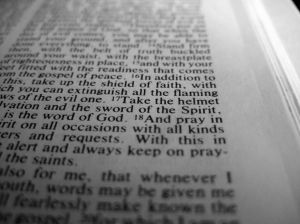
Perhaps you are an Eleazar, fighting spiritual opposition and feeling overwhelmed in the battle. Perhaps there are those who should be standing with you but who have retreated instead. As you stand there, keep your hand on your sword, which is the Word of God. Keep your hand frozen to the sword. Don’t let go of the Scriptures for even a moment; hold on to its promises and commands and prayers.

Eleazar must have known that dropping his sword or even loosening his grip on it would have meant defeat for his cause and certain death for himself. We, too, must know that our spiritual well-being and success depend on this sword of God’s Word: we conquer by clinging to its truth, or we suffer defeat by losing our grip on it.

Stand strong, “Eleazar.” Though your hand grow tired, keep it frozen to your sword. “And the LORD will bring about a great victory.